
Unlearning the White Devil
This is no Borjarnon, boy! No Borjarnon!

Popular culture trains us to associate iconography with feelings. The appearance of characters and objects invoke emotions in us, and over time these things can become absolutely indelible parts of culture. In the way that a Ferrari’s chassis might evoke “coolness” or “speed” or how the appearance of an M1 Abrams may evoke feelings of “brutality” or “violence”, we naturally associate shapes and colours with feelings. This can take place over the course of… ten, twenty, thirty years and even longer.
Sunrise’s Mobile Suit Gundam franchise is a collection of iconography that evokes feelings. From 1979 to the present day it represents a serious commercial force, but in the 1990’s it was suffering from being a ship with no captain.
1993’s Mobile Suit Victory Gundam marked the first time ever that series director Yoshiyuki Tomino would depart to work on other projects (Garzey’s Wing, Brain Powerd) and so the gap between it and his eventual return were marked by three shows of mixed reception, none of which were part of Gundam’s main chronology; Mobile Fighter G-Gundam, New Mobile Report Gundam Wing and New Mobile Century Gundam X. G-Gundam took years to finally find its fanbase, Wing was criticised for it’s meandering story and Gundam X was simply cancelled for low ratings before it even had a chance to properly finish.
This isn’t to say that these shows didn’t find their fans eventually, I myself think G-Gundam and Gundam X represent some of the strongest animation and storytelling in the franchise, but it was clear that Sunrise’s hubris with their treatment of staff on Victory had cost them. Tomino-san would return in 1998 to direct Turn A Gundam.
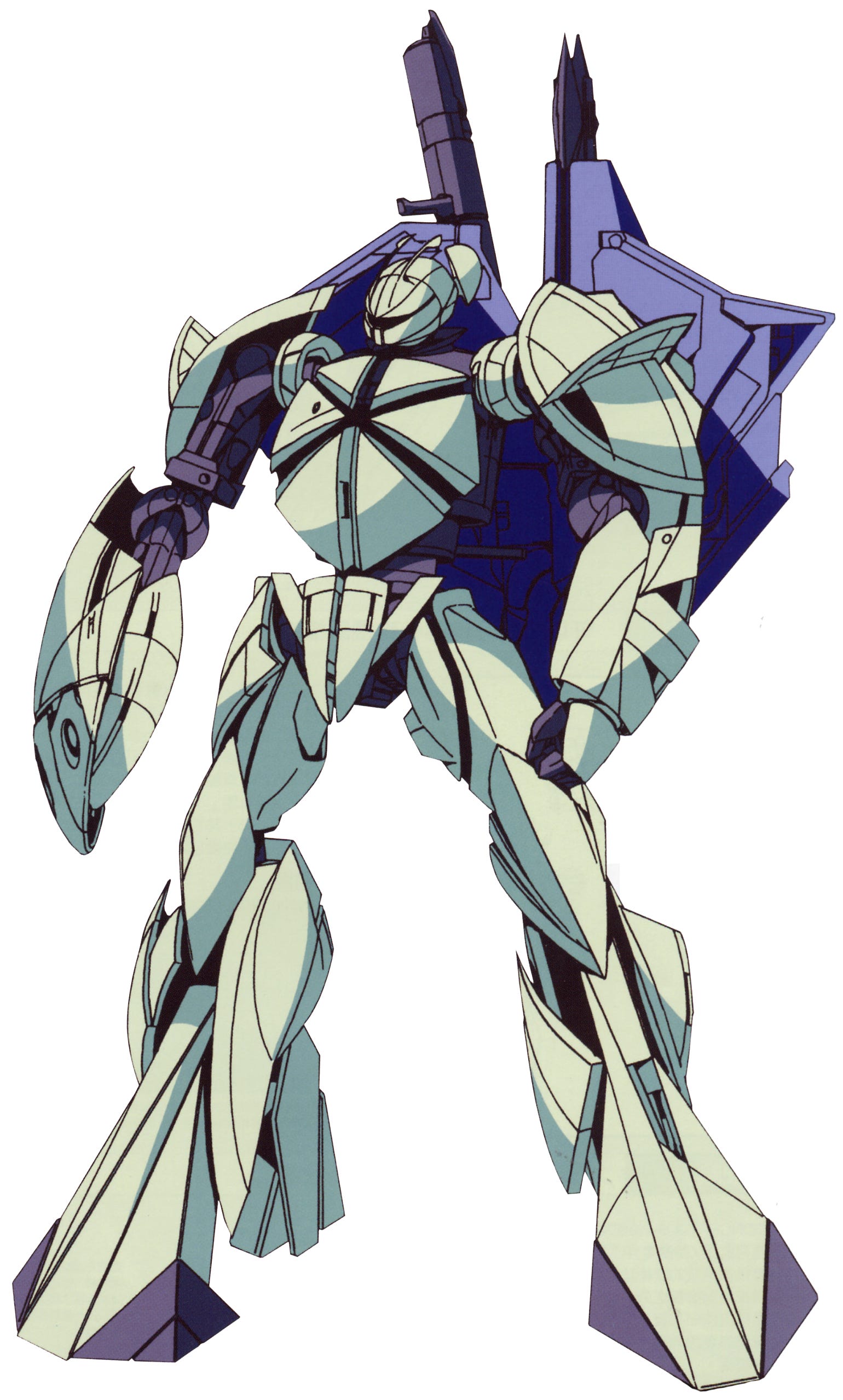
Turn A is an oddball in the Gundam franchise. The lead Gundam, the “System-∀99 ∀ Gundam” was designed by famed late American designer and illustrator Syd Mead. It had a distinctive post-Industrial Revolution aesthetic, with the humans on Earth living in a sort of fictionalised 1920’s America. There are no space colonies, there are no newtypes, and the Gundam itself is only ever named a handful of times in the entire show.
Turn A Gundam asks the viewer to undo twenty years of iconography and conditioning by deliberately calling things the wrong name and deliberately not naming other things.
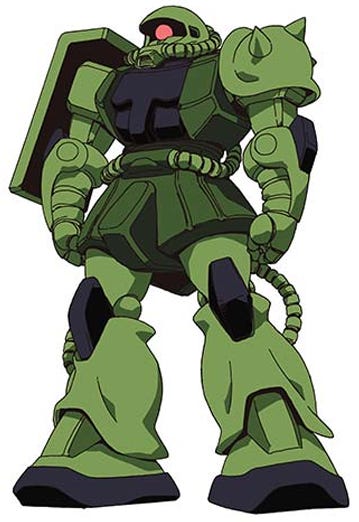
This is not a Zaku. This is a Borjarnon. Turn A deliberately places this in front of you as a litmus test. If you continue call this thing a “Zaku” in the context, you didn’t get the show. In the Gundam of the past, the Zaku represented the oppressive military arm of the Principality of Zeon, the iconic antagonists of the original Gundam series. In the show, the earthlings dig up old mobile suits in huge mounds called “Mountain Cycles”, where they were preserved from some ancient apocalypse that effectively reset Earth’s level of technology to zero. None of the earthlings know what the hell a “zaku” or a “zeon” is, but to them, it’s the coolest thing they’ve ever seen.
The Borjarnon itself is actually named after the character Lily Borjano, a noblewoman in the story whom the men of the Luizianna Militia greatly respect. The Zaku has gone from harsh sounding consonants to a gentle, feminine name. The greatest acts of heroism in the show are arguably performed from the cockpit of the humble Borjarnon — the Zaku has been reborn, once the agent of horrific crimes against humanity, into a hero. Proof that the mobile suits, named “dolls” by the earthbound humans, were only ever merely tools. There is nothing inherently heroic about a tool, but you can wield these tools to do great things.
The show states that these machines come from a time called “The Dark History”, which itself is simply a shorthand for “The Entire Rest of the Gundam Franchise”, even the ones Tomino didn’t work on (They even show you the Wing Zero in a flashback.). The Dark History itself is never picked apart or elaborated on, and neither is the conflict between the Turn A or it’s brother unit the Turn X. It simply refers to The Gundam Story, the apocryphal tale of the White Devil who rained fire on battlefields across time and space. A member of the Moonrace even comments that the Gundam represented a force of oppression, but protagonist Loran Cehack rejects this, by effectively positing that the Gundam is merely a tool — a conclusion he arrives at simply by himself. History would tend to agree with him; the Gundam represented oppression nearly as often as it represented liberation over the years, or even represented the personal desires of the pilot, but it’s all a distraction from the main point that the machine is a white, blank slate.
Mazinger Z might represent Kouji Kabuto, Getter-1 might represent Ryoma Nagare, but to suggest that a Gundam represents its pilot is a deliberate missing of the point. Even Amuro Ray abandoned the original Gundam, allowing its body to be used as bait to finish off the Zeong. Then he allows the last vestige of it, the Core Fighter, to simply drift off into space while he landed in the arms of his friends. They’re the ones who matter here.
Loran is the greatest Gundam pilot, because he understands what machines are supposed to be. He has no aesthetic attachment to war or violence, he simply sees these larger-than-life humanoid robots as any other machine, like a car. He didn’t need history to tell him that “Gundam” is a fancy word for “war robot”, he figured it out on his own just by (ironically) having a more down-to-earth world view.
The Turn A Gundam itself, said to be a demon from another time, the agent of an apocalypse that rent the Earth’s technology into useless dust, really is just a “White Doll” after all. Here it is, holding some laundry out to dry.
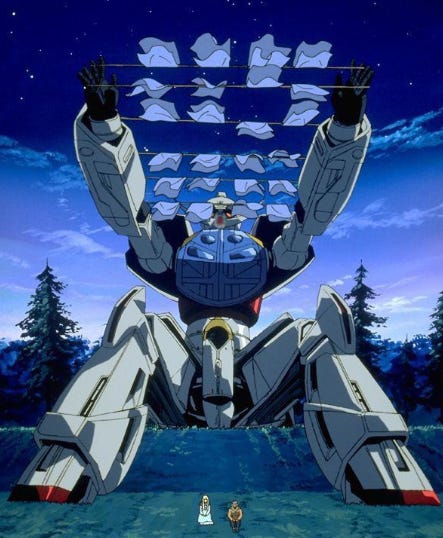
In other episodes, it’s shown to be transporting farm animals, haul heavy equipment, or do other menial tasks. The original RX-78-2 Gundam received the nom de guerre of “The White Devil”, because those who saw it in combat were sure to meet their end. Later stories in the Gundam chronology would even establish fictionalized variations of post-traumatic stress disorder, simply seeing a Gundam would be enough to send some veterans into a panic.
In Turn A, the “White Devil” is now affectionately referred to as the “White Doll” or, more comically, the “Moustache” for its unique arrangement of the classic Gundam V-fin on it’s head, courtesy of Syd Mead. A weapon of immense destructive capability, in the hands of its pilot Loran Cehack, is now a tool to help people do something as mundane as hang their laundry.
It’s the Turn A’s older brother, the Turn X Gundam, that acts as the true “final opponent” for the Turn A itself. In a moment that briefly harkens back to the original Gundam, Loran simply abandons the Turn A and allows both it and the Turn X to become entombed in a nanomachine cocoon. In the ultimate thematic conclusion, the Gundam lives and dies on the back of simply being a tool. It doesn’t represent Loran Cehack, it simply exists as a machine in the context of it’s day.
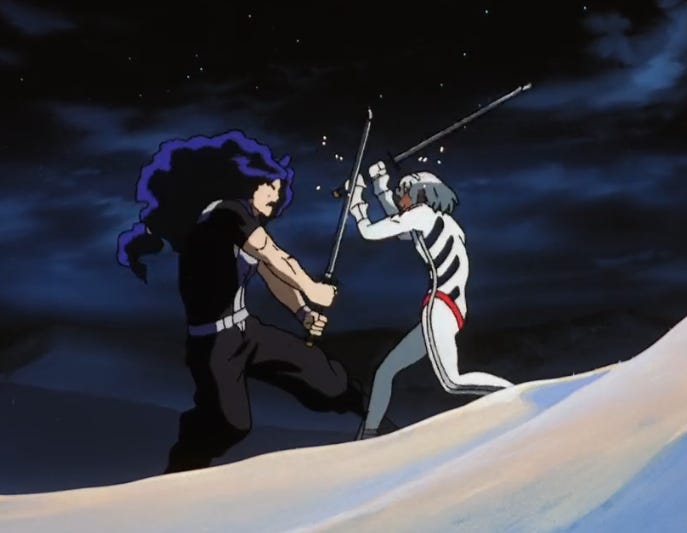
Just like in the original Gundam, the antagonist ejects using the head of their machine, and the two simply engage in a swordfight, but instead of being a drawn out clash of ideology, it barely lasts any time at all. The fighting doesn’t matter, Gym himself is just a samurai-wannabe playing pretend, and he pays for it.
The Moonlight Butterfly, the apocalyptic nanomachine-based system that both the Turn A and Turn X Gundams use in their final struggle against each other, as though possessed, rip the swords from their opponents, entombing Gym Gingnham inside with it. Gym is consumed, literally, by the aesthetics of war. Loran is allowed to go free, because he was never trapped by it to begin with. As if the symbolism couldn’t be any more heavy-handed, both Gundams are even described as hollow machines with minimal interior mechanisms. They’re literally empty of both mechanics and of meaning! They are filled with the purpose that the pilots give them!
So if there is a single point Turn A Gundam tries to impress upon you, it’s that Gundam isn’t a hero or a villain. It’s just a big robot. A very, very cool robot, one with myriad uses that can advance or stifle human civilization, but it’s still just a tool.
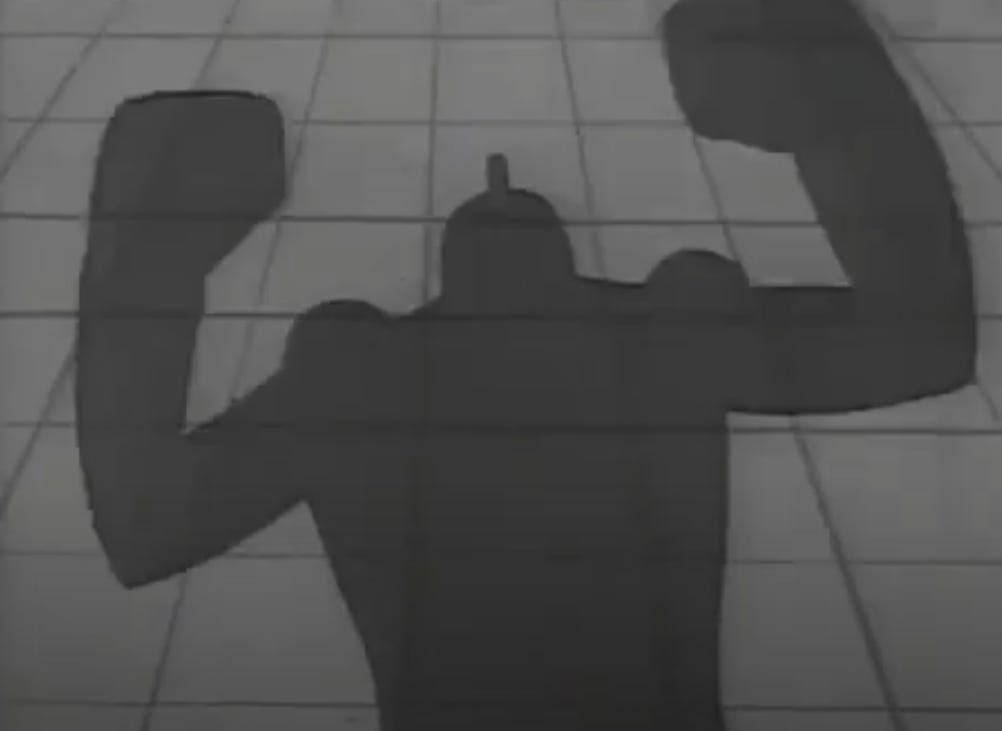
What was it they sung in Tetsujin 28-go? “At times it’s on the side of evil, at times it’s on the side of justice. It all depends on the remote control”?
It seems that the angel-devil dichotomy of these impossible machines in fiction never left us.
finished reading this out of sheer boredom upon checking your substack after that frontiers review from last year, i haven't gotten into gundam *yet*, but i really enjoyed this essay about the iconography in the series of the gundam mechs. your writing style is something i feel is heavily underappreciated, great work.